



The independent workplace consultancy.
We are the leading global independent consultancy transforming the world of work. We use science, research and our depth of experience to deliver exceptional results for exceptional companies.
AWA at a glance


Founded. Independent from day one — no landlord, developer or agency behind us.


Reach in the UK, Europe, North America, the Middle East and India, with an associate network that spans the world.


organisations advised

Research built with the Center for Evidence-Based Management.
What AWA helps organisations to achieve
At AWA we believe the workplace (people, place, practices, processes, tech) is a powerful business tool that needs to be created to intentionally support business goals.

Workplaces that help business leaders deliver on their business goals
We work with your 'C' suite and project teams to prioritise business goals and translate them into future workplace experiences, designs, spaces, technologies, practices and processes, all deliberately designed to improve competitive business performance.

Workforces that are on their 'A' game, wherever they work
Applying our scientific research, cognitive science, tech tools and education we deliver innovative programmes and systems that enhance the performance and wellbeing of every brain and community on your payroll.

Workforces that embrace AI at every level
Building on pre-existing investments in licences and tech training, we co-create AI transformation programmes that join all the dots, create psychological safety and unleash the energy of your people to apply AI to their daily work.

Leaders equipped to lead high performance hybrid teams
We deliver exciting, gamified programmes that support leaders in managing high performance hybrid teams underpinned by our science and backed by tools, models and experience.

Workplaces deliberately designed to enhance human performance
We apply our scientific research, cognitive science, design and technology experience to create workplaces that reinforce good practices and remove things that drain brains.

Infrastructure managers equipped to manage the workplace of the future
Our AWA Institute delivers research, events, training and education designed to enhance the business skills of leaders entrusted with managing their organisation's workplaces, practices, technologies and experiences.
Why independence matters
Who can you trust to give you advice you can depend on in a market with so much commercial bias?
At AWA, we pride ourselves on being fiercely independent, science and evidence based. We're one of the few independent practices in the market.
So, you can rely on our advice and solutions. The only axe we ever grind is our clients'. We want our clients to have great advice from experienced consultants uninfluenced by any commercial imperative.
For many we compete with, commercial success is associated with the size (and therefore value) of a design contract, a build contract, a lease transaction. Their consultancy offers are a means to an end, not the end itself.
We broker nothing, resell no one's technology, and take no share of what gets built. We are paid the same whether the answer is expand or shrink, move or stay.
If it's independence, science and objectivity you value, look no further.
A recommendation is only as good as its evidence.

Workplace data
Occupancy, utilisation and survey data from your own organisation. We measure demand before anything is designed. Benchmarks come later.

Organisational insight
Leadership interviews and listening across the organisation. What the business is trying to achieve, and where the work actually gets stuck.

Behavioural neuroscience
What the science of attention, habit formation, psychological safety, trust and social cohesion says about how people work, learn and change. This is what makes the change stick.

Published research
Our own programmes, most of them built with the Center for Evidence-Based Management, published in full.
Our disciplines
Our multi-skilled team of experts embraces the disciplines of psychology, neuroscience, technology, design, data science and leadership development, transcending functional boundaries to work on some of the most complex client challenges.
Workplace Strategy
What workplace solutions do we need for business success? Quantum, location, style, purpose, experience.
Change Management
Programmes that engage people in their change and create excitement and motivation.
Cognitive Wellbeing & Performance
The most advanced cognitive science on the planet, delivered in bespoke programmes designed to get whole organisations on their 'A' game.
AI Transformation
Joined up programmes that create psychological safety and turn all your employees into skilled AI enthusiasts ready to apply AI in their own jobs.
Evidence in practice
Three clients in three sectors, with workplaces tuned to their business needs, applying modern workplace practices and thinking to reduce cost and cost per head.
British Heart Foundation
 The challenge
Headcount growing, lease expiring, and a culture that recognised work by presence at a desk. The landlord offered a single floor, 28% less space than BHF occupied. It was only affordable if the way people worked changed first.
 What we did
Measured how the space was used and what people needed to work well. Modelled demand for each kind of setting. Trained the people managers, because the constraint was management skill. A champions network and the #FlexiblyConnected framework left each team to manage its own expectations.
 The outcome
Less space, more people, and the money released went into research. The change programme won an HR Excellence Award.
WTW
Two firms merged on paper long before they merged in practice. Two sets of habits, two sets of loyalties, and a property portfolio sized for two companies.
Ran the integration as a change programme aimed at something measurable: social cohesion, one of the six factors our research with CEBMa shows drives knowledge-worker performance. Built one community deliberately, then resized the estate to how the combined firm worked.
Social cohesion rose across the merged business, and portfolio reductions saved $100m a year. The estate could only be cut that far because the community question was answered first.
Bupa
Six UK offices built for full attendance, and after the pandemic a question nobody could answer with confidence: what is each of these buildings actually for?
Measured the split between collaborative work and focus work, sized space on peak-occupancy modelling rather than headcount, and redefined each office as a support centre: somewhere you go for the things better done together.
Three Manchester buildings became one. Brighton, Staines, Bristol and Leeds right-sized. The modelling showed a 40% portfolio reduction available at two days a week of attendance. This is a modelled figure.
Our research
We ask clients to act on evidence, so we publish our own where it can be tested. Most of it is built with the Center for Evidence-Based Management.
 The six factors of knowledge worker productivity
The research we still design around.
The six factors of knowledge worker productivity
The research we still design around.
 Managing the agile workforce
Leading teams you cannot see.
Managing the agile workforce
Leading teams you cannot see.
 Designing workplace experiences
What makes a workplace worth using.
Designing workplace experiences
What makes a workplace worth using.
 Cognitive fitness
The science behind the Cognitive Performance Index.
Cognitive fitness
The science behind the Cognitive Performance Index.
 AWA Hybrid Working Index
What office attendance is actually doing.
AWA Hybrid Working Index
What office attendance is actually doing.
 AI Impact Report 2026
412 UK occupations, assessed task by task.
AI Impact Report 2026
412 UK occupations, assessed task by task.
AWA Institute
Where the research becomes practice: certified development programmes and a member community that includes Microsoft, PwC, Bupa and Google DeepMind, deliberately free of suppliers.
In the conversation
Our people appear in Forbes, on the BBC, in The Times and across the trade press, and make The DNA of Work podcast.
Small teams, global reach
A project runs on a small team assembled for it: a strategist, a change specialist, an analyst, each chosen because they have done the work they are advising on. Around sixty people sit behind those teams, across the UK, the US, Europe, India and beyond, most of them senior associates who work this way by choice. One method runs through all of it.
 Andrew MawsonFounder & Managing DirectorUK
 Alison HallSenior AssociateUK
 Amy ThornburyPractice ManagerUK
 Andrew TristSenior AssociateUK
 Annick SlootmaekersSenior AssociateChina
 Brad TaylorDirector of ConsultingUK
 Calle SågbomAssociateFrance
 Céline ChaverotSenior AssociateFrance
 Celine RaguetteSenior AssociateCanada
 Chris GallagherAI Strategy AssociateUK
 Clark ElliottSenior Workplace Strategy ConsultantSwitzerland
 Conrad WildsmithSenior AssociateUK
 Chris DelahuntSenior AssociateUK
 Damian MearsSenior AssociateUK
 Emily LiangAssociateChina
 Florian PucherSenior AssociateChina
 Gopal AhirFinance Operations ManagerIndia
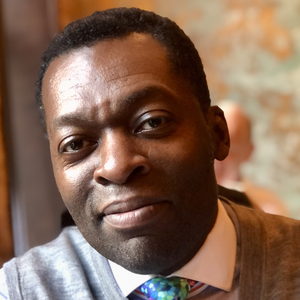 Hans NyamieSenior AssociateUK
 Helena BarcelosAssociateBrazil
 Ian BurgessInterior DesignerUK
 Íñigo Muñoz BilbaoSenior AssociateChina
 Izabel BarrosSenior AssociateBrazil
 Jitesh PatelAssociateSE Asia
 Joyce WongSenior AssociateChina
 Karen PlumDirector of Research and DevelopmentUK
 Katherine RilianeSenior AssociateFrance
 Kailash ChanganiSenior AssociateUK
 Kay FabellaSenior AssociateSpain
 Kristen BennettSenior AssociateUS
 Lisa SarjeantSenior Associate and HR ExpertUK
 Lloyd JosephAssociateUK
 Lisa WhitedSenior AssociateUS
 Louise BendallSenior AssociateUK
 Lori GeeSenior AssociateUS
 Mel ParkesSenior AssociateUK
 Martin EllisonSenior AssociateUK
 Marie MacInnisWorkplace DesignerUS
 Nida MehtabSenior AssociateUS
 Nathan GuptaNeuroscience AssociateUK
 Nick WrightSenior AssociateUK
 Niels RasmussenSenior AssociateDenmark
 Nathalie DeCiantisSenior AssociateCanada
 Natalia SavitcaiaAssociateFrance
 Oliver BaxterAssociateUAE
 Pat TurnbullSenior AssociateUS
 Parthajeet SarmaSenior AssociateIndia
 Pallab KakotiWorkplace Analytics and Insights LeadIndia
 Paul BurtonSenior AssociateUK
 Paul AdamsBusiness Coaching AssociateUK
 Paul JanssenswillenLaboratory Workplace Senior StrategistUK
 Polly YanAssociateChina
 Rebecca FoxAssociateUK
 Richard LupoSenior Associate – Sustainability & EnvironmentUK
 Suchandra SomSenior AssociateIndia
 Sampada KumbheJunior AssociateIndia
 Shashidhar SharmaSenior AssociateIndia
 Srikar ASenior AssociateIndia
 Vidhee ShuklaDigital Marketing ExecutiveIndia
 William BullerSenior AssociateUK
Global capability, local understanding.
The people on your project live in the market it is in. They already know what the commute costs and what a policy written somewhere else runs into locally. Behind them sits one method and one evidence base: a finding from one country is tested against what our teams see in the others before it reaches your report.
 London
New York
San Francisco
Bangalore
London
New York
San Francisco
Bangalore
Our principles

Independent
We earn nothing from the lease, the fit-out or the technology. You are paying for the thinking and there is nothing else on the bill.

Science-guided
We follow the evidence, and change our position when it changes.

Human-centred
We test recommendations on the people who have to live with them.

Judged on numbers
We agree what we are measuring before the work starts, and report it after.

Less is often the answer
Smaller and simpler usually costs less and emits less.